
Discover the most-read stories and insights from our community
IntroductionHaving too many spare parts might seem safe, but it’s a silent profit killer. Overstocking ties up capital, increases storage costs, and often leads to waste through obsolescence or damage. Many factories overcompensate to “be safe,” without realizing the hidden financial and operational costs.In this post, we unpack the real cost of overstocking and show how HUB’s smart inventory tools keep your spare parts levels optimized.💸 The Hidden Financial Costs of Overstocking - Capital Lock-In: Spare parts represent frozen cash that could be used elsewhere. - Higher Insurance & Taxes: Excess stock increases warehousing expenses and insurance premiums. - Depreciation & Obsolescence: Parts become outdated or unusable over time, especially in fast-evolving industries. - Waste from Damage or Expiry: Some items have shelf lives (e.g., lubricants, seals) and degrade when left unused.🏭 The Operational Downsides - Crowded Warehouses: Overstocking clutters space, making retrieval slower and harder. - Inventory Errors: Larger stockpiles lead to higher chances of miscounts, lost items, or duplicate orders. - Blocked Workflow: Unnecessary items consume resources like labor and storage that should focus on critical parts.🧠 How HUB Helps You Avoid Overstocking 📊 1. Data-Driven Demand Forecasting - HUB analyzes historical consumption trends to recommend optimal stock levels based on actual usage — not guesswork. 🛠️ 2. Dynamic Reorder Points - Rather than fixed formulas, HUB adjusts reorder points automatically as usage, lead times, or failure patterns evolve. 🚦 3. Slow-Moving Parts Alerts - HUB flags stagnant or slow-moving items, giving you a chance to repurpose, resell, or stop reordering. 📈 4. Real-Time Inventory Dashboards - Gain full visibility into stock levels by location, category, and criticality — ensuring you see and act on overstock trends. 🔄 5. Resale & Exchange System - Turn stagnant stock into cash or trade through HUB’s marketplace feature — freeing up capital and space.✅ ConclusionMore isn’t always better. Overstocking might feel safe, but it creates hidden costs that drain your budget and slow down your operations. With HUB, you can strike the perfect balance between availability and efficiency — keeping your inventory lean, optimized, and productive.🔗 [Try HUB’s Inventory Optimization Tools]🔗 [Book a Free Inventory Audit Demo]
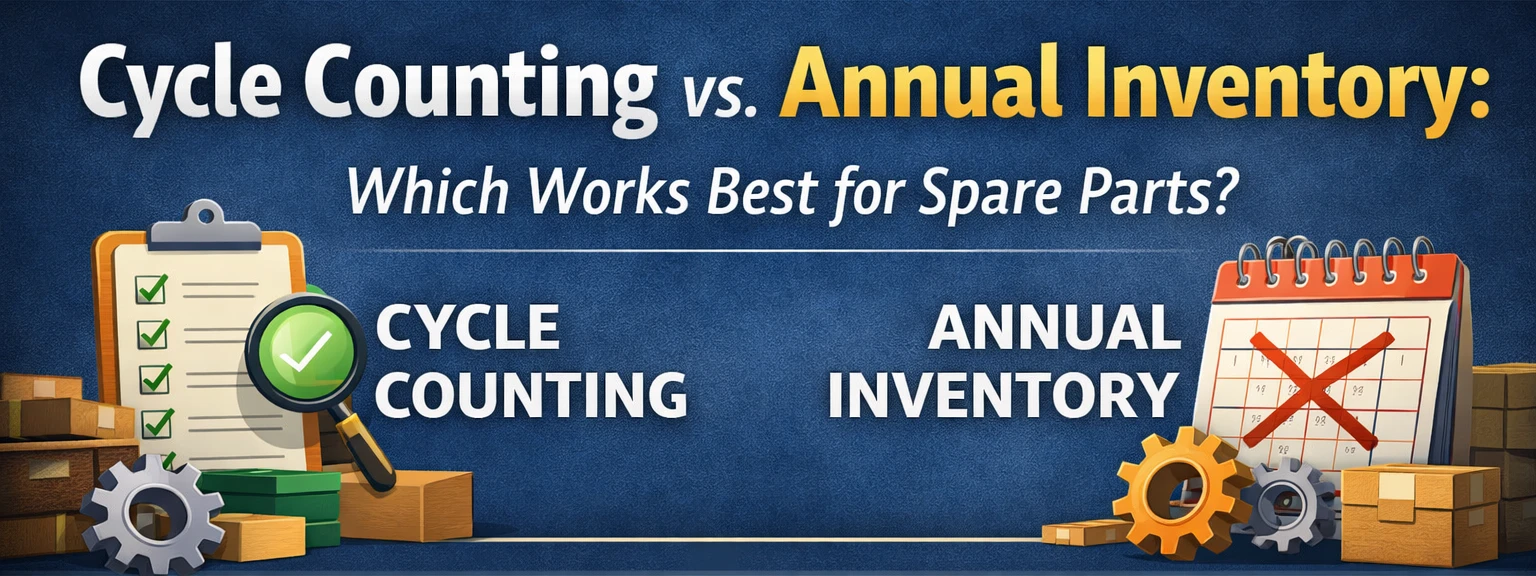
IntroductionInventory accuracy is critical for reliable spare parts procurement. But how should you track it? Many companies rely on annual inventory audits, while others use cycle counting for ongoing accuracy. Each method has strengths and weaknesses — especially in the world of industrial spare parts, where stock turnover and criticality vary widely.In this post, we compare both methods and explain how HUB’s tracking tools support smarter, more reliable inventory management.📅 What Is Annual Inventory?An annual inventory audit counts all stock items once per year — usually during a planned shutdown.✅ Pros:- Comprehensive "snapshot"- Useful for audits and compliance- Easy to schedule once annually❌ Cons:- Requires halting operations- Prone to large errors if stock drifts between counts- Time-consuming and resource-heavy🔄 What Is Cycle Counting?Cycle counting involves regularly counting small sections of inventory (e.g., weekly or monthly) rather than everything at once.✅ Pros:- Less disruption to operations- More consistent accuracy- Errors are caught and corrected faster❌ Cons:- Requires ongoing resources- May miss slow-moving items if not well-planned- Complexity increases with large inventories🧠 Which Works Best for Spare Parts?For high-value or fast-moving spare parts, cycle counting is typically superior because it ensures ongoing accuracy. However, annual inventory can be a good backup for full validation — especially for compliance or external audits.🚀 How HUB Enhances Both Methods ✅ 1. Automated Cycle Count Scheduling - HUB lets you schedule counts by part type, usage rate, or location — ensuring critical spares are checked more often. 📊 2. Real-Time Inventory Dashboards - Track discrepancies instantly with live dashboards that highlight mismatches between expected and actual stock. 🔔 3. Alerts for Slow-Moving or High-Risk Items - Prioritize cycle counts on items prone to errors, spoilage, or theft. 📤 4. Easy Data Export & Audit Reports - Generate reports instantly for external auditors or compliance checks.✅ ConclusionBoth cycle counting and annual inventory have roles to play — but for critical spare parts, ongoing cycle counts combined with HUB’s smart tracking tools give you the accuracy, flexibility, and confidence you need.🔗 Start Smart Counting with HUB: www.HUBspareparts.com🔗 Book a Demo of HUB’s Inventory Tools: WhatsApp Chat
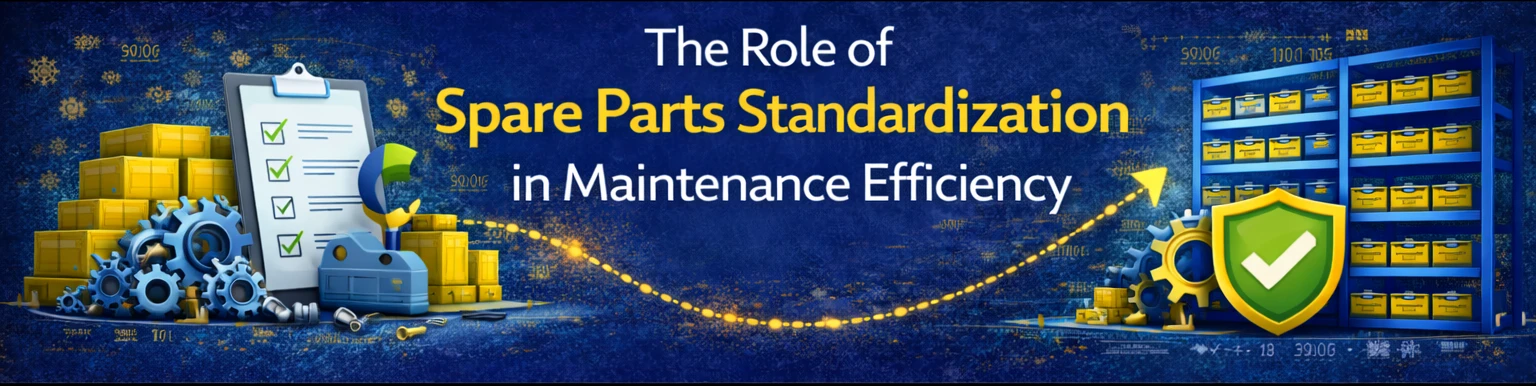
IntroductionImagine reducing your spare parts inventory by 30% while speeding up maintenance response time. That’s the power of spare parts standardization. By consolidating part types and unifying specs across equipment, factories can simplify procurement, reduce costs, and boost uptime.In this post, we’ll explain why standardization matters and how HUB helps manage standardized spare parts lists for lasting efficiency.🔧 What Is Spare Parts Standardization?Standardization means selecting and using common part types across multiple machines or production lines, instead of stocking multiple variations of the same function (e.g., using the same type of sensor or bearing across different machines).✅ Benefits of Spare Parts Standardization - 📉 Lower Inventory Holding Costs: Fewer SKUs mean less stock and tied-up capital. - ⚙️ Faster Maintenance: Technicians can swap parts more quickly with familiar, standardized components. - 🔄 Simplified Procurement: Bulk buying of common parts secures better pricing and supplier terms. - 🛡️ Improved Reliability: Standardized parts are often higher quality and easier to inspect/maintain.❌ Challenges Without Standardization - Overstocking of multiple part variants - Increased chance of stockouts on low-frequency SKUs - Complicated training for maintenance teams - Harder to manage supplier relationships🚀 How HUB Supports Spare Parts Standardization🏷️ 1. Standardization Tagging - Mark parts as “Standard” in HUB to build a centralized, searchable list of approved components.📊 2. Cross-Equipment Mapping - HUB links standardized parts to multiple machines or systems, helping you track where each standard part is used.📦 3. Vendor Consolidation - With fewer part variants, HUB helps you negotiate bulk deals and manage preferred suppliers for standardized items.🔔 4. Alerts for Non-Standard Purchases - HUB flags procurement requests that don’t align with the standardized list, ensuring compliance.💡 Pro TipWhen onboarding new machinery, involve HUB and your procurement team early to align specs with your existing standardized spare parts list.✅ ConclusionStandardizing spare parts is a proven way to cut costs, simplify procurement, and keep maintenance efficient. HUB provides the digital tools you need to manage, enforce, and benefit from a standardized parts strategy.🔗 Start Standardizing with HUB: www.HUBspareparts.com🔗 Book a Demo of HUB’s Standardization Tools: Contact Us
IntroductionNot all spare parts last forever. Items like lubricants, gaskets, adhesives, seals, and certain chemicals have shelf lives, and using them past expiry can lead to failures, safety risks, and compliance issues. Yet, many factories don’t have a system to track these critical dates.In this post, we explain best practices for managing spare parts with expiration dates and show how HUB’s inventory tools keep you compliant and efficient.🛢️ Why Expiration Dates Matter 🛠️ Performance Risks: Expired lubricants or seals may lose their integrity and fail in service. ⚠️ Safety & Compliance: Regulations often require tracking and safe disposal of outdated materials. 💸 Cost of Waste: Ignoring expiry leads to unnecessary scrapping and waste.✅ Best Practices for Managing Expirable Spare Parts 1️⃣ Track Expiration Dates at the Item Level - Each part should be tagged with its manufacture date, shelf life, and expiry date. 2️⃣ Use FIFO (First In, First Out) Method - Always issue the oldest stock first to prevent premature expiry of unused items. 3️⃣ Set Alert Thresholds - Get notified well before items expire so you can plan usage or replacement. 4️⃣ Document Disposal & Compliance - Keep clear records of how expired parts are handled to meet safety and audit requirements.🚀 How HUB Simplifies Shelf Life & Expiry Management ✅ Expiry Date Tagging: Track manufacturing, shelf life, and expiry dates for every stocked part. 🔔 Automated Alerts: Receive notifications when parts approach expiry — ensuring timely use or replacement. 📦 FIFO Tracking: HUB enforces FIFO principles in stock issuance to minimize waste. 📄 Compliance Reporting: Export expiry reports for audits or regulatory checks. ♻️ Waste Reduction Tools: Identify parts at risk of expiry and optimize reorder schedules.✅ ConclusionManaging spare parts with expiration dates isn’t optional — it’s essential for performance, safety, and cost control. HUB makes expiry tracking simple, smart, and proactive, helping your plant avoid failures and meet compliance standards.🔗 Explore HUB’s Expiry Tracking Tools: www.HUBspareparts.com🔗 Book a Demo of HUB’s FIFO System: Contact Us
IntroductionEvery plant has them: shelves of stagnant spare parts that were bought “just in case” but never used. These parts tie up capital, take up valuable storage space, and often depreciate in value over time. Left unmanaged, they turn into deadweight on your balance sheet.The good news? HUB’s Smart Resale and Exchange System transforms stagnant inventory from a burden into an asset — improving cash flow and optimizing your spare parts ecosystem.🛑 The Problem with Stagnant Spare Parts - 💰 Capital Lock-in: Money spent on unused inventory can’t be reinvested. - 🏭 Storage Costs: Warehousing, insurance, and handling fees pile up. - 📉 Depreciation Risk: Parts can become obsolete or degraded over time. - 🛠️ Inventory Bloat: Makes stock management harder and increases error risk.🔄 HUB’s Smart Resale & Exchange: How It Works 🛒 1. List Spare Parts for Resale Upload unused or excess parts to HUB’s marketplace. Set your price, quantity, and part condition, and gain exposure to other factories in need. ♻️ 2. Exchange Parts with Other Plants No budget? No problem. HUB enables part-for-part exchanges between verified users, turning surplus into needed items. 👀 3. Visibility Across Industries Your listing reaches a wide network of manufacturers, maintenance teams, and engineering buyers — maximizing your chances of finding a match. 📝 4. Verified Transactions & Quality Checks HUB provides part verification, supplier ratings, and transaction history to ensure trust and transparency in every deal. 📊 5. Inventory Dashboard Integration Track what’s listed, sold, or exchanged right from your HUB dashboard — keeping your inventory and accounting up to date.💡 Benefits of Using HUB’s Resale & Exchange System - 💸 Recover Cash from stagnant assets - 🔁 Barter for Needed Parts without budget strain - 🏢 Optimize Warehouse Space - 📈 Improve Inventory Turnover Ratios - 🔗 Contribute to a Circular Spare Parts Economy✅ Conclusion Stagnant spare parts no longer have to sit idle, draining your resources. With HUB’s Smart Resale and Exchange System, you can turn surplus into savings, swaps, and new opportunities — keeping your inventory lean and your cash flow healthy.🔗 List Your Stagnant Spare Parts on HUB: www.HUBspareparts.com🔗 Explore Available Exchange Offers Now: WhatsApp chat
IntroductionFor decades, min-max inventory control has been a standard method for managing stock: set a minimum level to trigger reordering and a maximum level to cap inventory. But in today’s data-driven world, many ask: Is min-max still effective, or is it outdated?In this post, we’ll break down the pros and cons of min-max strategies and show how HUB modernizes this classic approach with real-time analytics and dynamic adjustments.🧮 What Is Min-Max Inventory Control?- Minimum Level (Min): The point at which a reorder is triggered.- Maximum Level (Max): The cap on how much stock you keep to avoid overstocking.✅ Pros of Min-Max Inventory Control✔️ Simple to understand and implement✔️ Helps prevent stockouts✔️ Works well for predictable, stable demand❌ Cons of Min-Max Inventory Control❌ Static — doesn’t adapt to sudden changes in demand or supply❌ Can lead to overstocking if max levels aren’t reviewed❌ Ignores supplier variability, lead time shifts, and seasonal trends🚀 How HUB Modernizes Min-Max Inventory📊 Dynamic Min-Max AdjustmentsHUB recalculates min and max levels automatically based on real-time usage, supplier performance, and seasonal demand patterns.🔔 Smart AlertsGet proactive notifications when parts approach min or max levels — no need for manual checks.🔄 Integration with Reorder WorkflowsHUB connects min-max triggers directly to your approval and procurement workflows for seamless restocking.📈 Analytics & ForecastingSee historical data and predictive trends to decide when to recalibrate your min-max settings.💡 Best Practice TipCombine HUB’s dynamic min-max system with cycle counting and safety stock monitoring for a more responsive and resilient inventory strategy.✅ ConclusionMin-max inventory control isn’t dead — but it needs an upgrade. HUB brings min-max into the modern era with data-driven insights, automation, and predictive power, keeping your spare parts procurement smart and efficient.🔗 Learn More About HUB’s Inventory Tools: www.HUBspareparts.com🔗 Book a Demo for Dynamic Min-Max Setup: WhatsApp Chat



You need to Sign in to view this feature

This address will be removed from this list
 english