
Discover the most-read stories and insights from our community
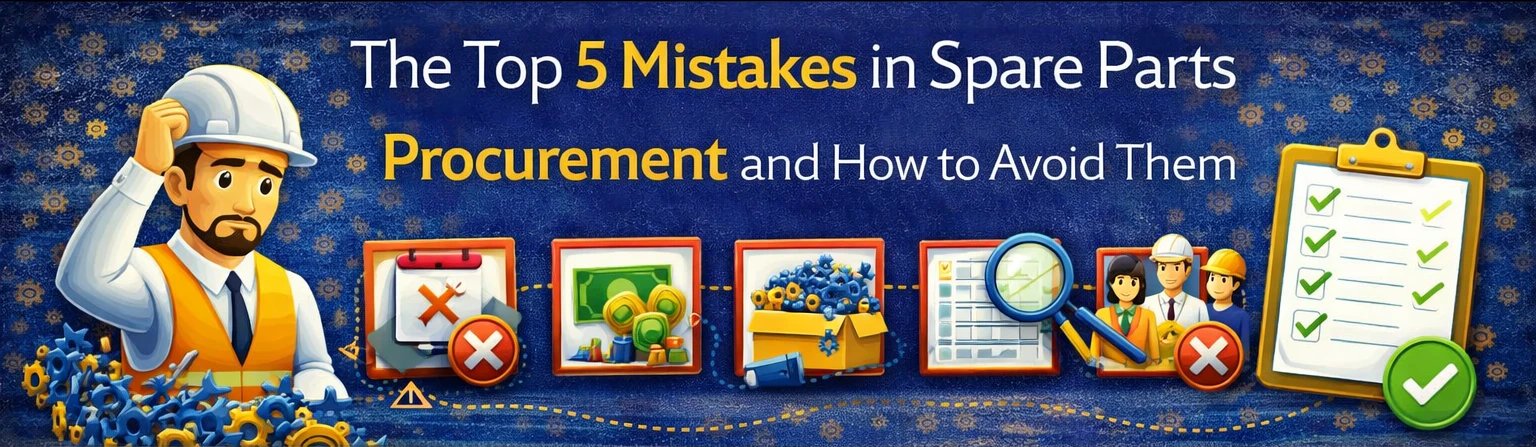
IntroductionIn the industrial world, spare parts procurement is often treated as a reactive process — leading to inflated costs, critical downtime, and misaligned inventory. Whether you’re managing a factory, overseeing a maintenance team, or handling purchasing, avoiding common procurement pitfalls is essential for operational efficiency.At HUB Industrial Spare Parts Procurement Ecosystem, we’ve worked with dozens of engineering teams and purchasing departments. We’ve identified the most frequent errors — and designed solutions that eliminate them.🛑 Mistake #1: Buying Only When Equipment FailsThe Problem:Waiting until something breaks before ordering the part leads to emergency costs, shipping delays, and avoidable downtime.The Solution:Use predictive procurement. HUB analyzes historical usage and machine life cycles to recommend when to buy critical spares — before failure happens.📦 Mistake #2: Overstocking Low-Moving Spare PartsThe Problem:Procurement teams often stock excessive quantities of “just-in-case” parts, tying up capital and storage space in dead inventory.The Solution:HUB provides consumption-based planning tools and even offers a resale/exchange marketplace where companies can offload stagnant inventory to others who need it.🧩 Mistake #3: No Standardized Approval WorkflowThe Problem:Without structured procurement workflows, decisions may bypass technical or budgetary checks — causing quality issues or misaligned purchases.The Solution:HUB enables a multi-tier approval process involving engineers, maintenance heads, procurement officers, and finance. This ensures right part, right reason, right budget.📉 Mistake #4: Not Comparing Vendors or PricesThe Problem:Many teams buy from the same vendors every time, missing out on better pricing, availability, or lead times.The Solution:HUB’s multi-vendor marketplace compares real-time pricing, delivery times, and product availability — across local and international brands — in one interface.🔍 Mistake #5: Lack of Procurement Data AnalysisThe Problem:Without data, it’s impossible to see what parts are overused, underused, or where procurement budgets are leaking.The Solution:HUB offers detailed data dashboards and AI-driven insights, helping you optimize reorder points, supplier selection, and yearly procurement plans.✅ Conclusion: Avoid Costly Mistakes with HUBAvoiding these common errors can save your facility significant time and money — and improve production reliability. HUB is built specifically to solve these problems, with features that predict demand, streamline workflows, and optimize inventory and vendor selection.🔗 Start using HUB now : www.HUBspareparts.com🔗 Book a free demo or strategy call : WhatsApp Chat
IntroductionThe price you pay for a spare part is only part of the story. To truly understand its financial impact, you need to calculate the Total Cost of Ownership (TCO) — a figure that includes not just purchase price but also storage, maintenance, obsolescence, and disposal costs.In this post, we’ll break down how to calculate TCO for spare parts and show how HUB’s cost-tracking tools make it easy to keep your procurement budget on track.💸 What Is TCO in Spare Parts Procurement? - TCO captures all costs associated with a spare part throughout its lifecycle, helping you make smarter purchasing and stocking decisions.🧮 Key Components of TCO 1️⃣ Purchase Cost - The upfront cost of acquiring the part. 2️⃣ Shipping & Handling - Freight charges, customs, and special handling costs. 3️⃣ Storage Costs - Warehousing, insurance, and environmental controls needed to keep the part in usable condition. 4️⃣ Maintenance & Installation - Costs linked to installing, inspecting, and maintaining the part while it’s in service. 5️⃣ Obsolescence & Depreciation - The risk of the part becoming outdated or unusable before it’s needed. 6️⃣ Disposal Costs - Fees and labor for safely disposing of the part once it’s no longer needed.🚀 How HUB Helps You Track and Optimize TCO 📊 1. TCO Breakdown Per Part - HUB calculates and displays a full cost profile for each spare part, from acquisition to disposal. 🏷️ 2. Obsolescence & Expiry Alerts - Get notified when parts are approaching the end of their useful life, helping you act before value is lost. 📈 3. Cost Trend Dashboards - Visualize how storage, maintenance, and other hidden costs accumulate over time. 🔔 4. Supplier Performance & Warranty Tracking - Monitor part performance and warranty claims to factor in long-term reliability.💡 Pro Tip - When evaluating new suppliers, compare not just price but full TCO to avoid hidden costs down the line.✅ Conclusion - TCO is the key to smarter procurement. HUB’s analytics and tracking tools help you see the full picture, ensuring you choose parts that offer true value over their entire lifecycle.🔗 Explore HUB’s TCO Tracking Tools: www.HUBspareparts.com🔗 Book a Demo for Cost Management: Contact Us
IntroductionSpare parts procurement can quietly drain your budget if not carefully managed. While strategic overhauls are great, sometimes you need quick, actionable wins that make an immediate impact.In this post, we share 7 proven strategies to reduce procurement costs — and explain how HUB’s vendor comparison and bulk deal features make it easy to save without sacrificing quality.🚀 7 Quick Wins to Cut Procurement Costs 1️⃣ Compare Prices Across Multiple Vendors - Never settle for the first quote. Use HUB’s real-time vendor comparison tool to find the best price without sacrificing quality. 2️⃣ Consolidate Orders for Volume Discounts - Bundling purchases allows you to unlock bulk pricing. HUB helps you group orders across departments to maximize savings. 3️⃣ Track Supplier Performance - Reliable vendors save money in the long run. HUB’s analytics track delivery speed, quality, and service levels so you avoid costly mistakes. 4️⃣ Prioritize Local Suppliers - Cut freight costs and lead times by sourcing locally when possible. HUB filters suppliers by location to help you find nearby options. 5️⃣ Leverage HUB’s Resale/Exchange Marketplace - Turn stagnant stock into cash or trade value using HUB’s resale and exchange system — a hidden cost-saving opportunity. 6️⃣ Automate Reorders to Prevent Rush Orders - Avoid costly emergency orders by setting dynamic reorder points in HUB, ensuring you always restock on time. 7️⃣ Monitor Spend with Dashboards - Use HUB’s spend tracking dashboards to spot overspending patterns and adjust your procurement strategy in real time.✅ Conclusion - Cutting procurement costs doesn’t have to mean cutting corners. With HUB’s tools — from vendor comparison to bulk deals and smart reordering — you can keep your plant running efficiently while protecting your budget.🔗 Explore HUB’s Cost-Saving Tools: www.HUBspareparts.com🔗 Book a Demo of HUB’s Vendor Comparison Engine: Contact Us
IntroductionIn today’s fast-moving industrial environment, traditional spare parts procurement can no longer keep up with production demands. Delays, overstocking, and unplanned downtime cost industries millions annually. The solution? AI-powered predictive procurement – and at the forefront of this revolution is HUB Industrial Spare Parts Procurement Ecosystem.The Problem with Traditional ProcurementConventional spare parts sourcing is reactive. Orders are made after a failure occurs or just in case inventories run low. This approach results in:✔️ Unused stagnant inventory✔️ Emergency orders at premium prices✔️ Risk of production stoppages due to part shortagesHow HUB Solves It with AI + Data AnalyticsHUB transforms spare parts procurement by turning data into actionable foresight. Here’s how:🧠 Predictive Procurement EngineBy analyzing consumption history, asset criticality, and downtime trends, HUB forecasts when and what spare parts are needed – long before failure occurs.📅 Procurement Scheduling & Workflow ManagementHUB enables engineers to schedule recurring or expected part purchases and route them through a structured multi-tier approval process involving engineering, purchasing, and executive layers.📊 Data-Driven Insights for Smart Decision MakingReal-time dashboards show usage patterns, supplier performance, regional trends, and cost-saving opportunities. This empowers managers to:✔️ Identify critical spare parts✔️ Avoid Overstocking✔️ Compare vendor pricing across the ecosystem♻️ Resale and Exchange of Stagnant InventoryUnused parts don’t have to sit on shelves. HUB helps companies resell or exchange stagnant inventory through its marketplace, turning dead stock into value.Why It Matters for Your Business✔️ Minimize unplanned downtime✔️ Reduce emergency procurement costs✔️ Improve spare parts ROI✔️ Enhance inter-department collaboration✔️ Build a proactive procurement cultureJoin the Future of Spare Parts ManagementThe future isn’t about buying parts—it’s about managing parts intelligently. With HUB, your procurement strategy becomes a competitive advantage powered by AI, analytics, and engineering insight.🔗 Start using HUB now : www.hubspareparts.com
IntroductionFor decades, Excel has been the go-to tool for managing spare parts procurement — and for good reason. It’s flexible, familiar, and accessible. But in today’s fast-paced, data-driven industrial environment, relying on spreadsheets is not only outdated — it’s risky.If your team still manages spare parts purchases, inventory, and suppliers using Excel, it’s time to consider what that’s costing you — and how HUB provides a smarter, structured solution.⚠️ 5 Hidden Risks of Using Excel for Spare Parts Procurement1. No Real-Time VisibilityExcel files are static. They can’t show you what's happening in real time — whether a part is available, in transit, or already consumed.The HUB Solution:Live dashboards give real-time inventory levels, reorder alerts, and procurement statuses across departments and locations.2. Error-Prone and ManualHuman error is one of the biggest risks in Excel-based procurement. One wrong formula or copied row can lead to stockouts or duplicate orders.The HUB Solution:Built-in validation, automated calculations, and approval workflows ensure data accuracy at every step.3. No Workflow or Approval StructureExcel doesn’t support controlled approval layers. Anyone can update, delete, or share the file without accountability.The HUB Solution:Role-based permissions and multi-level approval routing keep procurement aligned with company policy.4. Lack of Supplier IntegrationSpreadsheets don’t integrate with supplier catalogs, lead times, or availability — leading to back-and-forth emails and delays.The HUB Solution:HUB connects to a multi-vendor marketplace where you can compare prices, view lead times, and purchase — all in one place.5. No Analytics or ForecastingExcel tracks the past, but it doesn’t help you predict what you'll need next month, quarter, or year.The HUB Solution:With AI-powered analytics, HUB analyzes usage, lead times, and failure rates to help you build a predictive procurement plan.🔁 Side-by-Side Comparison: Excel vs. HUBFeatureExcel SheetsHUB Procurement SystemReal-Time Inventory❌ No ✅ YesSupplier Integration ❌ No ✅ Multi-vendor marketplaceApproval Workflow ❌ No ✅ Role-based & trackablePredictive Reordering ❌ No ✅ AI-driven forecastingAnalytics & Reporting Basic (manual) ✅ Smart dashboardsError Control Manual corrections ✅ Validations & alerts✅ ConclusionExcel might have been enough when your procurement needs were simpler. But modern industrial operations demand smarter, faster, and more reliable systems.HUB was built specifically for the complexity of industrial spare parts — combining procurement, inventory, suppliers, scheduling, and analytics in one intelligent platform.It’s time to retire the spreadsheets. Your factory deserves better.🔗 Upgrade from Excel to HUB now: www.HUBspareparts.com🔗 Book a free demo with our team: WhatsApp Chat
IntroductionDoes your team still rely on WhatsApp messages, last-minute calls, or Excel sheets to manage spare parts purchases? If so, you’re not alone — but you’re also at risk of stockouts, overstocking, inflated costs, and production delays.It’s time to move from chaos to control with a structured spare parts procurement plan tailored for industrial operations.In this step-by-step guide, we’ll show you how to build a smart, streamlined procurement process — and how the HUB Industrial Procurement Ecosystem supports every step.🧭 Step 1: Audit Your Existing Spare Parts InventoryWhy it matters: You can’t manage what you can’t see.Action: List all spare parts in use, including frequency of use, lead times, current stock levels, and criticality.HUB Solution: HUB allows you to upload and track your inventory data for better visibility and forecasting.🛠️ Step 2: Categorize Spare Parts by Criticality & UsageWhy it matters: Not all parts are equal — a control relay and a PLC CPU don’t carry the same risk if unavailable.Action: Use ABC or VED (Vital–Essential–Desirable) analysis to rank parts.HUB Solution: HUB helps tag parts and assign levels to facilitate smarter reorder logic and budget planning.📅 Step 3: Create a Procurement ScheduleWhy it matters: Scheduling parts procurement around maintenance and consumption patterns prevents chaos.Action: Align purchases with planned downtime, seasonal demand, and lead times.HUB Solution: HUB’s scheduling feature allows you to automate procurement cycles and set alerts.📋 Step 4: Establish a Multi-Level Approval WorkflowWhy it matters: Without structure, engineers buy unapproved or overpriced parts.Action: Define roles: Engineers (request), Managers (review), Procurement (budget), Finance (approve).HUB Solution: HUB enables a tiered workflow for requests, reviews, and approvals — fully trackable.🧾 Step 5: Choose Verified Suppliers with Historical DataWhy it matters: Working with unreliable vendors leads to delays and quality issues.Action: Build a database of trusted vendors with historical performance indicators.HUB Solution: HUB hosts multi-vendor listings with ratings, price comparisons, and availability filters.📊 Step 6: Monitor, Analyze, and ImproveWhy it matters: The best plans are dynamic. Review what's working and adjust.Action: Use KPIs like lead time, stock turnover, emergency purchase ratio, and part consumption trends.HUB Solution: HUB provides AI-powered analytics dashboards to guide continuous improvement.✅ ConclusionA structured procurement plan is no longer a luxury — it’s a necessity for industrial performance. By organizing inventory, scheduling smarter purchases, involving the right people, and analyzing data, your spare parts strategy becomes a source of competitive advantage.HUB brings all of this together in one platform — from planning and approvals to supplier matching and analytics.🔗 Start planning with HUB : www.HUBSpareparts.com🔗 Schedule a free consultation: WhatsApp chat



You need to Sign in to view this feature

This address will be removed from this list
 english