
Discover the most-read stories and insights from our community
IntroductionWhat works in one region might fail in another. Different climates, equipment ages, and usage patterns mean that spare parts consumption varies from region to region. Yet, many factories apply the same procurement strategy everywhere — resulting in stockouts in high-demand areas and overstocking elsewhere.HUB’s regional analytics and dynamic distribution features help you stock smartly — aligning procurement to real, location-based data.📍 Why Regional Spare Parts Consumption Data Matters - 🌡️ Environmental Factors: Heat, humidity, or dust can accelerate part wear in specific regions. - ⚙️ Asset Variation: Older or unique machines in certain sites need different spares. - 🏭 Operational Differences: Some factories run 24/7; others don’t — impacting wear rates. - 🚚 Logistics & Lead Times: Remote regions need different stocking strategies due to delivery delays.📈 How HUB’s Regional Analytics Help You Stay Ahead 📊 1. Track Spare Parts Consumption by Region - HUB lets you filter data by site or region to see: - Most-used parts - Failure rates - Consumption peaks and trends 📦 2. Dynamic Stock Distribution - HUB analyzes where stock is needed most and helps rebalance inventory: - Move parts from low-use areas to high-demand regions - Set different reorder points per location 🚦 3. Regional Alerts & Reorder Automation - Get location-specific alerts when stock runs low — so your busy plants are prioritized without overloading others. 🛠️ 4. Vendor & Lead Time Mapping - View supplier performance by region — identifying bottlenecks or lead time issues in certain areas.🌍 Case Example - A factory network in Upper Egypt sees faster wear on drive belts due to dust exposure. HUB flags this and adjusts reorder points higher for that site while keeping other regions optimized for minimal stock.✅ Conclusion - One-size-fits-all stocking doesn’t work. With HUB’s regional analytics and dynamic stock tools, you ensure every site has the right parts at the right time — reducing downtime, costs, and waste.🔗 Discover HUB’s Regional Stocking Tools: www.HUBspareparts.com🔗 Request a Demo on Regional Analytics: WhatsApp Chat
IntroductionManaging spare parts inventory might seem simple — until small mistakes snowball into downtime, wasted money, and frustrated teams. Many factories fall into the same traps, but the good news is they’re avoidable.In this post, we highlight 5 of the most common spare parts inventory mistakes and explain how HUB’s smart tools help you avoid them.❌ Mistake 1: Ignoring Shelf LifeSome parts (e.g., lubricants, seals, filters) degrade over time. Holding them too long can lead to failures or compliance issues.✅ HUB Solution:HUB tracks expiration dates and flags parts nearing expiry for priority use or replacement.❌ Mistake 2: Poor Labeling and IdentificationUnclear or missing labels lead to part mix-ups, delays, and errors during maintenance.✅ HUB Solution:HUB links every part to a unique barcode/QR code, with digital records and images for easy identification.❌ Mistake 3: Inaccurate Inventory DataStock counts often drift over time, especially with manual systems, causing stockouts or overstocking.✅ HUB Solution:Live dashboards and automated cycle count scheduling keep your inventory data fresh and reliable.❌ Mistake 4: Not Tracking Slow-Moving or Obsolete PartsHolding on to dead stock consumes space and capital.✅ HUB Solution:HUB flags stagnant parts and suggests resale, exchange, or disposal options through its marketplace.❌ Mistake 5: Lack of Multi-Site VisibilityDifferent plants may hoard parts others need, but without shared visibility, collaboration fails.✅ HUB Solution:HUB provides a cross-location inventory view so teams can borrow, share, or transfer spares efficiently.✅ ConclusionSmall mistakes in spare parts inventory can have big consequences. With HUB, you get the tools to keep your stock organized, optimized, and always ready to support your operations.🔗 Start a Free Trial of HUB: www.HUBspareparts.com🔗 Book a Demo to Fix Inventory Gaps: WhatsApp Chat
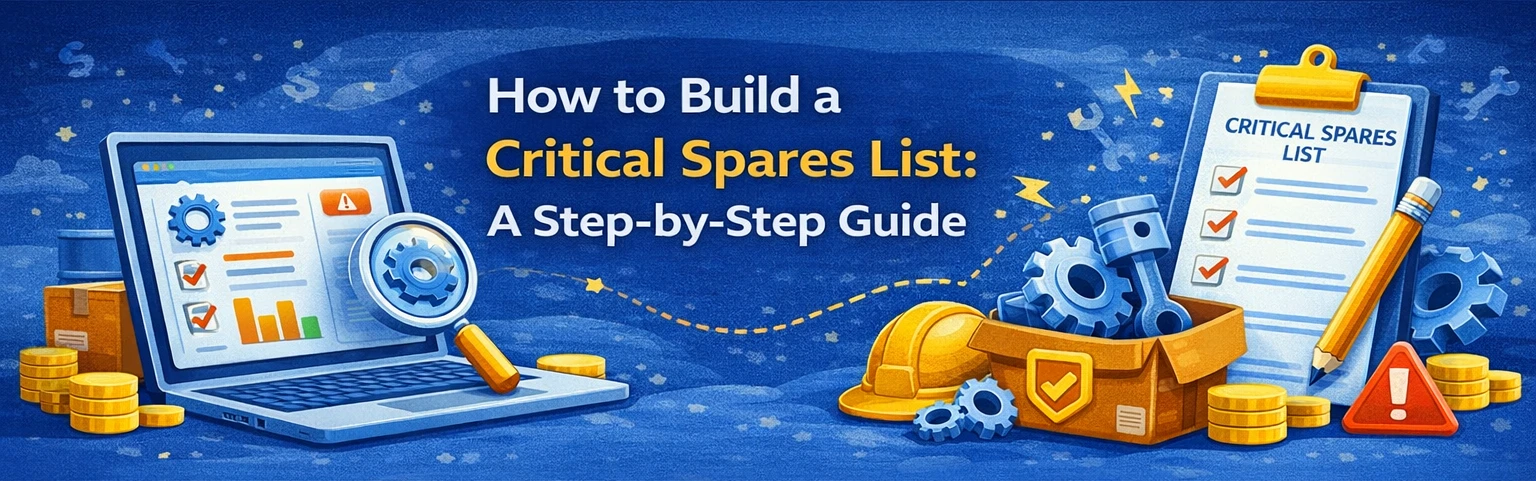
IntroductionA single missing part can halt production — but keeping everything in stock isn't practical. That’s why every plant needs a critical spares list: a prioritized catalog of parts that are essential for continuous operations.In this step-by-step guide, we’ll show you how to build your list and explain how HUB’s tagging feature keeps it dynamic, searchable, and integrated with your procurement workflows.🛠️ Step 1: Define ‘Critical’ for Your Operations - Critical spares are usually: - Required for safety or compliance - Difficult to source quickly (long lead time) - Essential for key equipment with no redundancy - High cost of downtime if missing🔍 Step 2: Map Your Equipment & Failure Modes - List major assets and break down: - Common failure points - MTBF (Mean Time Between Failures) - Historical data on part replacements🗂️ Step 3: List Potential Spare Parts - Catalog all components related to each asset — from motors and sensors to belts and fuses.🚦 Step 4: Prioritize Based on Risk & Impact Rate each part by: - Criticality score (impact on production) - Availability (lead time) - Cost (replacement price vs. downtime risk) - Use a simple matrix to decide which parts make your critical list.🧩 Step 5: Validate & Review RegularlyInvolve engineers, maintenance managers, and procurement teams to validate the list. Schedule reviews (e.g., annually) to update it based on changes in equipment or operations.🚀 How HUB Enhances Your Critical Spares List ✅ Smart Tagging: Mark items as “Critical” in HUB for easy filtering and fast reorder alerts. 📊 Dynamic Dashboards: Track the health and stock levels of critical spares at a glance. 🔔 Priority Alerts: Get notified instantly when critical parts fall below safety stock. 📦 Vendor Tracking: Link critical parts with top-performing suppliers for faster sourcing. 🔁 Workflow Integration: Ensure all purchase requests for critical parts follow expedited workflows.✅ ConclusionBuilding a critical spares list is a must for operational resilience. With HUB, you can create, manage, and act on your critical parts list seamlessly — keeping your plant running no matter what.🔗 Start Tagging Critical Spares in HUB: www.HUBspareparts.com🔗 Book a Free Demo for Critical Parts Management: WhatsApp Chat
IntroductionOne of the biggest decisions in industrial procurement strategy is whether to centralize or decentralize the purchasing of spare parts. Each model comes with its own strengths, risks, and use cases — and choosing the wrong one can lead to delays, higher costs, or inventory chaos.In this post, we’ll break down both models, explore the pros and cons, and show how HUB supports both centralized and decentralized procurement through multi-user, multi-location management.🏢 What Is Centralized Spare Parts Procurement?All purchasing decisions are made by a central team — usually at HQ or a designated procurement department.✅ Pros: - Better negotiation power with suppliers - Uniform procurement processes - Centralized data and reporting - Easier inventory standardization❌ Cons: - Slower response to urgent local needs - Risk of disconnect from on-site operations - More complex logistics across multiple locations🏭 What Is Decentralized Spare Parts Procurement? - Each department, site, or plant handles its own purchasing decisions — often independently.✅ Pros: - Faster response to urgent or local needs - More autonomy for site-level engineers - Tailored to specific equipment or conditions❌ Cons: - Higher costs from inconsistent vendor pricing - Fragmented data and reporting - Risk of duplicate orders or overstocking🔀 Hybrid Model: The Best of Both WorldsMany companies are now adopting a hybrid model: - Central team manages vendor contracts, pricing, and policy - Local teams initiate requests, manage stock, and handle day-to-day needs💡 How HUB Supports Both Models - Whether your organization is centralized, decentralized, or hybrid, HUB’s features allow you to structure your workflow accordingly:🧑🤝🧑 Multi-User Roles & Access Levels - Assign roles to engineers, buyers, managers, and finance at different locations — with custom permissions for each.🌍 Location-Based Inventory & Order Tracking - View procurement activity, stock levels, and reorder schedules by site or region.📦 Unified Vendor Marketplace - Even decentralized users purchase from HUB’s unified vendor pool — ensuring consistent pricing and faster sourcing.📈 Centralized Analytics, Local Autonomy - Head office sees big-picture reports across the company, while local teams operate with autonomy and speed.✅ Conclusion - There’s no one-size-fits-all solution. The right procurement model depends on your industry, operations, and risk appetite. - But whether you run a centralized strategy or empower your teams locally, HUB gives you the tools to structure it the right way.🔗 Explore HUB’s Multi-Site Procurement Tools: www.HUBspareparts.com🔗 Book a Demo for Your Organization Structure: WhatsApp chat
IntroductionIn industrial procurement, cash flow is everything. Large spare parts orders often tie up capital, limit flexibility, and strain budgets — especially during peak maintenance periods. That’s why Buy Now, Pay Later (BNPL) financing models are becoming a game-changer for industrial markets.In this post, we explain how BNPL works in industrial procurement and highlight how HUB’s flexible financing model helps you get the parts you need now while protecting your cash flow.💸 What Is Buy Now, Pay Later (BNPL) for Spare Parts? - BNPL allows buyers to: - Receive their spare parts immediately - Pay for them in installments or after a grace period - Avoid the upfront full payment burden - This model provides financial breathing room while ensuring operational continuity.✅ Benefits of BNPL in Industrial Procurement 🔄 Improved Cash Flow: Free up capital for other operational needs. 🛠️ Uninterrupted Operations: Secure critical parts fast, even during tight budget cycles. 💰 Better Budget Management: Align payments with project milestones or maintenance schedules. 🚀 Increased Purchasing Power: Access larger orders or higher-value parts without upfront strain.🧠 How HUB’s Financing Model Works 1️⃣ Instant Credit Assessment - HUB evaluates your company’s procurement history and profile to pre-approve credit limits quickly and transparently. 2️⃣ Flexible Payment Terms Choose from: - 30/60/90-day payment windows - Split payments across installments that align with your cash flow 3️⃣ Integrated Financing at Checkout - When placing orders on HUB, you’ll see BNPL as a built-in payment option — no third-party applications required. 4️⃣ Vendor Collaboration - HUB works closely with vendors to ensure timely delivery, while your payment terms remain flexible and stress-free. 5️⃣ Transparent Fees & No Hidden Costs - All financing fees are clearly shown upfront, ensuring there are no surprises later.📈 Use Case Example - A factory in urgent need of replacement drives faces budget delays. Using HUB’s BNPL option, they secure the parts within 48 hours and settle payment over 60 days — avoiding costly downtime.✅ Conclusion - Flexible financing is no longer a luxury; it’s a necessity in modern industrial procurement. HUB’s Buy Now, Pay Later model helps your business stay agile, keep operations running smoothly, and maintain a healthy cash flow — without compromise.🔗 Learn More About HUB’s Financing Options: www.HUBspareparts.com🔗 Request a Demo of HUB’s Checkout System: Contact Us



You need to Sign in to view this feature

This address will be removed from this list
 english